Logótipo da Cepheid
Solicitar informação
Localização / Idioma

{{headingText}}

{{paragraphText}}

{{continueBtnLabel}}

{{initials}}
Menu principal
Localização / Idioma

{{headingText}}

{{paragraphText}}

{{continueBtnLabel}}

Solicitar informação

Solicitar informação

Cepheid RADAR:
Proactive Surveillance

What is Cepheid RADAR?

Cepheid RADAR (Routine Analysis of Strain Dynamics and Test Reliability) encompasses proactive strain surveillance activities to identify genetic changes in circulating pathogens that may impact the performance of diagnostic tests. Just as radar is an important tool used by meteorologists to spot severe weather early, proactive surveillance forecasts how well a diagnostic test will detect ever-changing microbial pathogens.

Why Engage in Strain Surveillance?

Microorganisms such as bacteria and viruses mutate when they replicate. These mutations can lead to new and different strains that may evade host immunity and lead to outbreaks of disease.  The mutations may also impact the ability of diagnostic tests to detect a microorganism of interest.

Impact of Proactive Surveillance
ícone

Provides confidence in test quality: by assessing the performance of diagnostic tests against contemporary microbial strains, it is possible to predict the likelihood that a test will accurately detect circulating strains and avoid false negative results.

ícone

Enables outbreak preparedness: since outbreaks are usually caused by newly emerging strains of microorganisms, monitoring strain diversity and the ability of a diagnostic test to detect new strains keeps healthcare workers and public health agencies aware of potential new threats.

ícone

Triggers proactive test design: continuous monitoring of test performance could give Cepheid an early indication if changes are needed in our test designs.

How is Proactive Surveillance Done?

Cepheid’s RADAR activities include in silico (computer simulation) and in vitro (lab-based) testing. In silico testing involves analyzing the genetic material of current strains of microorganisms to determine if the primers and probes in Cepheid’s molecular tests match the microbial genetic material. In vitro testing analyzes actual specimens or microorganisms using Cepheid tests to assess test performance.

What Key Pathogens is Cepheid Monitoring Using Cepheid RADAR?

Current Strain Coverage

SARS-CoV-2 SARS-CoV-2

Cepheid’s Xpert Xpress CoV-2/Flu/RSV plus and Xpert Xpress CoV-2 plus tests detect three genes in SARS-CoV-2

    • E gene E gene
    • N gene N gene
    • RdRp gene RdRp gene

Pathogen Info

Coronaviruses like SARS-CoV-2 are RNA viruses that rely on error-prone RNA-dependent RNA polymerases (RdRps) for replication. This allows for the accumulation of mutations in the viral genome. Over time, these mutations can be positively selected for if they confer a fitness advantage for the virus, such as increased transmissibility. Recombination is another mechanism for genetic change, involving the exchange of relatively large segments of genetic material between two co-infecting, genetically distinct viruses.

Recombination occurs in many viruses, including coronaviruses, and has the potential to result in new, antigenically distinct viruses responsible for epidemics and even global pandemics of disease. These mutations and recombination events may also impact the performance of molecular-based diagnostic tests that require the detection of specific nucleic acid sequences. Indeed, this has been demonstrated for both influenza A virus1.2 and SARS-CoV 2.3 For this reason, molecular tests should be designed to detect highly conserved genetic sequences or detect multiple genetic sequences for redundancy in the case of impactful mutations in one target.2

Referências
  1. Jørgensen RL et al. Emergence of circulating influenza A H3N2 viruses with genetic drift in the matrix gene: be alert of false-negative test results. APMIS. 2022; 130: 612–617.
  2. Landry ML, Owen M. A falha na deteção da gripe A H1N1 destaca a necessidade de múltiplos alvos genéticos em testes moleculares da gripe. J Clin Microbiol 2023; 61:e00448-23.
  3. Kidd M et al. S-Variant SARS-CoV-2 Lineage B1.1.7 Is Associated with Significantly Higher Viral Load in Samples Tested by TaqPath Polymerase Chain Reaction. J Infect Dis. 2021 May 28;223(10):1666-1670. doi: 10.1093/infdis/jiab082. PMID: 33580259; PMCID: PMC7928763.
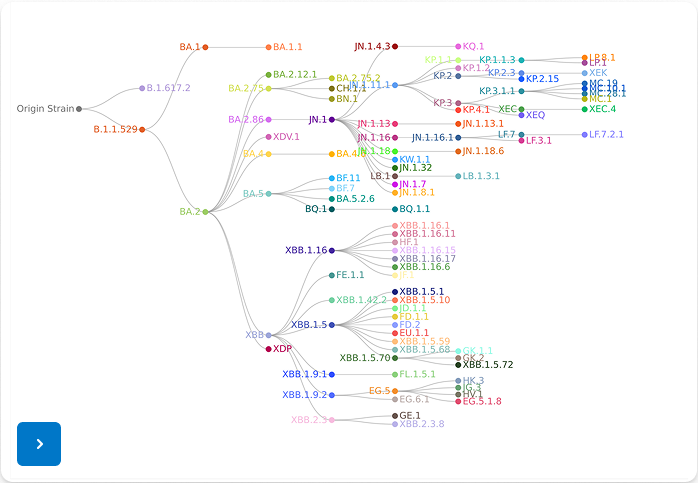
SARS-CoV-2 Variant Tree

Fonte: CDC COVID Data Tracker: Variant Proportions

URL: https://covid.cdc.gov/covid-data-tracker/#variant-proportions

Current Strain Coverage

Influenza Influenza

Cepheid’s Xpert Xpress CoV-2/Flu/RSV plus and Xpert Xpress Flu/RSV tests detect 5 influenza targets

  • Influenza A

    • Matrix gene (human and avian) Matrix gene (human and avian)
    • Basic polymerase gene Basic polymerase gene
    • Acidic polymerase gene Acidic polymerase gene
  • Influeza B

    • Matrix gene Matrix gene
    • Non-structural protein gene Non-structural protein gene

Pathogen Info

Influenza viruses are classified into types A, B, and C, the former two of which cause the most human infections. Influenza A (Flu A) is the most common type of influenza virus in humans and is generally responsible for seasonal flu epidemics and potential pandemics. Flu A viruses can also infect animals such as birds, pigs, and horses. Flu A viruses are further divided into subtypes based on two surface proteins: hemagglutinin (H) and neuraminidase (N). Seasonal flu is normally caused by influenza A subtypes H1, H2, H3, N1 and N2. Infections with influenza B (Flu B) virus are generally restricted to humans and less frequently cause epidemics.

Influenza viruses are RNA viruses that rely on error-prone RNA-dependent RNA polymerases (RdRps) for replication. This allows for the accumulation of mutations in the viral genome, known as genetic drift. Over time, these mutations can be positively selected for if they confer a fitness advantage for the virus, such as increased transmissibility.

Recombination is another mechanism for genetic change, involving the exchange of relatively large segments of genetic material between two co-infecting, genetically distinct viruses. Recombination has the potential to result in new, antigenically distinct viruses responsible for epidemics and even global pandemics.

These mutations and recombination events may also impact the performance of molecular-based diagnostic tests that require the detection of specific nucleic acid sequences. This has been demonstrated for both influenza A virus1.2 and SARS-CoV-23. For this reason, molecular tests should be designed to detect highly conserved genetic sequences or detect multiple genetic sequences for redundancy in the case of impactful mutations in one target2 (M. Landry).


“Monitoring the genetic drift of circulating viruses (and other microorganisms) and updating primer and/or probes is necessary to ensure continued reliable performance of diagnostic RT-PCR assays.”1

Referências
  1. Jørgensen RL et al. Emergence of circulating influenza A H3N2 viruses with genetic drift in the matrix gene: be alert of false-negative test results. APMIS. 2022; 130: 612–617.
  2. Landry ML, Owen M. A falha na deteção da gripe A H1N1 destaca a necessidade de múltiplos alvos genéticos em testes moleculares da gripe. J Clin Microbiol 2023; 61:e00448-23.
  3. Kidd M et al. S-Variant SARS-CoV-2 Lineage B1.1.7 Is Associated with Significantly Higher Viral Load in Samples Tested by TaqPath Polymerase Chain Reaction. J Infect Dis. 2021 May 28;223(10):1666-1670. doi: 10.1093/infdis/jiab082. PMID: 33580259; PMCID: PMC7928763.

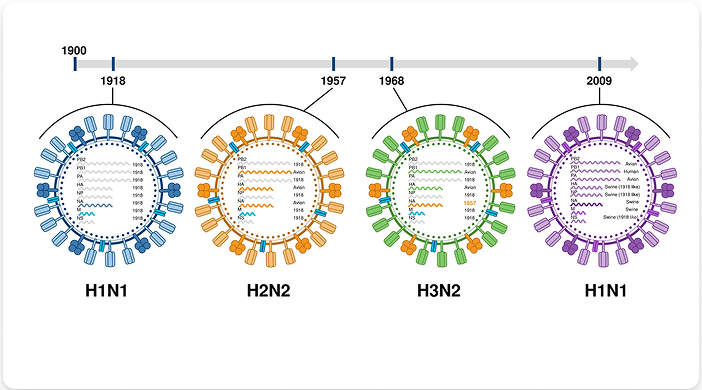
Influenza Subtypes from 4 Historic Pandemics

Influenza Subtypes from 4 Historic Pandemics

Fonte: Harrington WN, Kackos CM, Webby RJ. The evolution and future of influenza pandemic preparedness. Exp Mol Med. 2021;53(5):737-749. doi:10.1038/s12276-021-00603-0
License: https://creativecommons.org/licenses/by/4.0/

Current Strain Coverage

<i>C. difficile</i> C. difficile

Cepheid’s Xpert C. difficile/Epi and Xpert C. difficile BT tests detect

    • Toxin B gene (tcdB) Toxin B gene (tcdB)
    • Binary toxin gene (cdtA) Binary toxin gene (cdtA)
    • Deletion at nucleotide 117 in the tcdC gene (tcdC∆117) Deletion at nucleotide 117 in the tcdC gene (tcdC∆117)

Pathogen Info

Clostridioides difficile remains a major cause of healthcare-associated infections and a significant burden on the healthcare system.1.2 A major contributor to the rapid expansion of C. difficile infections has been the hypervirulent strain PCR ribotype 027 (RT027).3 Ever since the global expansion of the RT027 lineage, new virulent strains have emerged, some very closely related to RT027 and with the same single-base-pair deletion at nucleotide 117 within the tcdC gene (tcdC∆117).4


The Xpert C. difficile/Epi and Xpert C. difficile BT tests detect the toxin B gene (tcdB), binary toxin gene (cdtA), and tcdC∆117. Detection of tcdB indicates the presence of toxigenic C. difficile, while the combined detection of tcdB, cdtA, and tcdC∆117 presumptively identifies RT027. Recent studies have also described cases of C. difficile infection caused by strains that only produce the binary toxin CDT but are negative for the large clostridial toxins (Toxin A and Toxin B).5.6 Xpert C. difficile BT calls out the presence of the binary toxin gene cdtA, thus alerting the laboratory to the presence of these variant C. difficile strains.

Referências

  1. Ilic I, Zivanovic Macuzic I, Ilic M. Mortality Attributable to Clostridioides difficile Infection: The Rising Burden of Disease in European Countries. Medicina (Kaunas). 2024 Jul 28;60(8).
  2. Kwon JH, Olsen MA, Dubberke ER. The morbidity, mortality, and costs associated with Clostridium difficile infection. Infect Dis Clin North Am. 2015 Mar;29(1):123–134.
  3. Warny M, Pepin J, Fang A, Killgore G, Thompson A, Brazier J, et al. Toxin production by an emerging strain of Clostridium difficile associated with outbreaks of severe disease in North America and Europe. Lancet. 2005 Sep 30;366(9491):1079–1084.
  4. Markovska R, Dimitrov G, Gergova R, Boyanova L. Clostridioides difficile, a New “Superbug”. Microorganisms. 2023 Mar 26;11(4).
  5. Eckert C, Emirian A, Le Monnier A, Cathala L, De Montclos H, Goret J, et al. Prevalence and pathogenicity of binary toxin-positive Clostridium difficile strains that do not produce toxins A and B. New Microbes New Infect. 2015 Jan;3:12–17.
  6. Androga GO, Knight DR, Lim S-C, Foster NF, Riley TV. Antimicrobial resistance in large clostridial toxin-negative, binary toxin-positive Clostridium difficile ribotypes. Anaerobe.
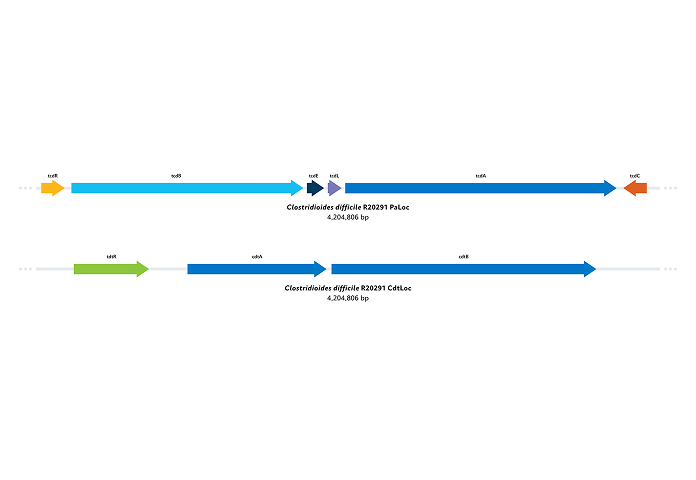
C. difficile genes

Fonte: C diff genes

Powered by Translations.com GlobalLink Web SoftwarePowered by GlobalLink Web