prod:prod_dcx-login





Seguir


+ Partilhar

Leitura de 3 m
21 de novembro de 2025
SAÚDE RESPIRATÓRIA
Artigo
Por que motivo o tipo de teste importa: PCR vs. antigénio em cuidados respiratórios ambulatórios
Os investigadores da Cepheid descobriram que a modalidade de teste de diagnóstico influencia as decisões de tratamento nos cuidados em ambulatório 1, decisões que podem afetar os esforços para mitigar a resistência antimicrobiana. Os resultados foram apresentados na IDWeekTM 2025 (outubro 19-22; Atlanta Georgia2), uma das principais conferências de doenças infeciosas do mundo.
Resumindo
Os investigadores da Cepheid realizaram uma análise retrospetiva dos dados do EHR de Truveta (cobrindo mais de 120 milhões de registos de doentes) e compararam a utilidade clínica dos testes rápidos de amplificação de ácidos nucleicos (NAAT, normalmente PCR) versus testes de antigénio para diagnosticar a doença semelhante à gripe (ILI, influenza-like illness) em contextos ambulatórios. O estudo focou-se em doentes testados para a COVID-19, gripe A/B ou vírus sincicial respiratório entre 2023 de janeiro e 2025 de abril. Apesar de as diretrizes favorecerem métodos moleculares para doentes sintomáticos, os testes de antigénio ainda foram utilizados em cerca de 75% dos casos de gripe e COVID-19. O estudo concluiu que os doentes testados com antigénio tinham significativamente maior probabilidade de receber antibióticos, especialmente quando os resultados dos testes eram negativos, realçando as vantagens em termos de diagnóstico e de gestão associadas ao NAAT.
Principais pontos a reter
- Uso de antibióticos: Os doentes testados com antigénio apresentaram taxas mais elevadas de uso de antibióticos do que os testados com PCR, independentemente de o resultado do teste ser positivo ou negativo.
- Confiança no diagnóstico: Os testes PCR mostraram taxas de positividade mais elevadas para a gripe e a COVID-19 (10,4% vs. ~5.7%), o que pode reduzir as prescrições desnecessárias de antibióticos.
- Preferência pela modalidade: Os testes de antigénio dominaram os testes à gripe e à COVID-19, enquanto o PCR foi preferido para o vírus sincicial respiratório (VSR) (usado em 62% dos casos).
- Implicações clínicas: Em populações com teste negativo, a prescrição de antibióticos foi significativamente maior com testes de antigénios, sugerindo que uma sensibilidade mais baixa leva a um tratamento mais empírico.
Por que é importante
O uso excessivo de antibióticos contribui para a resistência antimicrobiana, uma crescente ameaça à saúde global. Este estudo sublinha como a escolha do teste de diagnóstico pode influenciar as decisões de tratamento, especialmente em contextos ambulatórios onde o seguimento pode ser limitado. Ao melhorar a precisão do diagnóstico, os NAAT podem ajudar os médicos a tomar decisões mais confiantes, reduzir o uso desnecessário de antibióticos e alinhar-se melhor com as diretrizes clínicas. Isto é particularmente importante, uma vez que os vírus respiratórios continuam a circular e apresentam sintomas sobrepostos.
“À medida que a época das doenças respiratórias se aproxima, estas conclusões são especialmente relevantes para médicos, líderes de saúde pública e inovadores de diagnóstico focados na mitigação da resistência antimicrobiana”, afirmou Jordan Chase, autor principal do estudo e Diretor Global de Economia da Saúde e Investigação de Resultados (Health Economics and Outcomes Research) da Cepheid. “Estudos como este, que examinam as práticas do mundo real, são vitais para informar as iniciativas de gestão e apoiar os cuidados centrados nos doentes onde quer que sejam prestados.”
O essencial
Nos cuidados ambulatórios não hospitalares, os testes rápidos de NAAT oferecem uma ferramenta de diagnóstico mais fiável do que os testes de antigénios, levando a uma menor utilização de antibióticos e a uma melhor gestão. À medida que os sistemas de saúde procuram melhorar os resultados e reduzir a resistência, o alargamento do acesso a testes de elevada sensibilidade, como o PCR, deve ser uma prioridade.
Quer saber mais?
Leia o cartaz científico apresentado na IDWeek 2025.
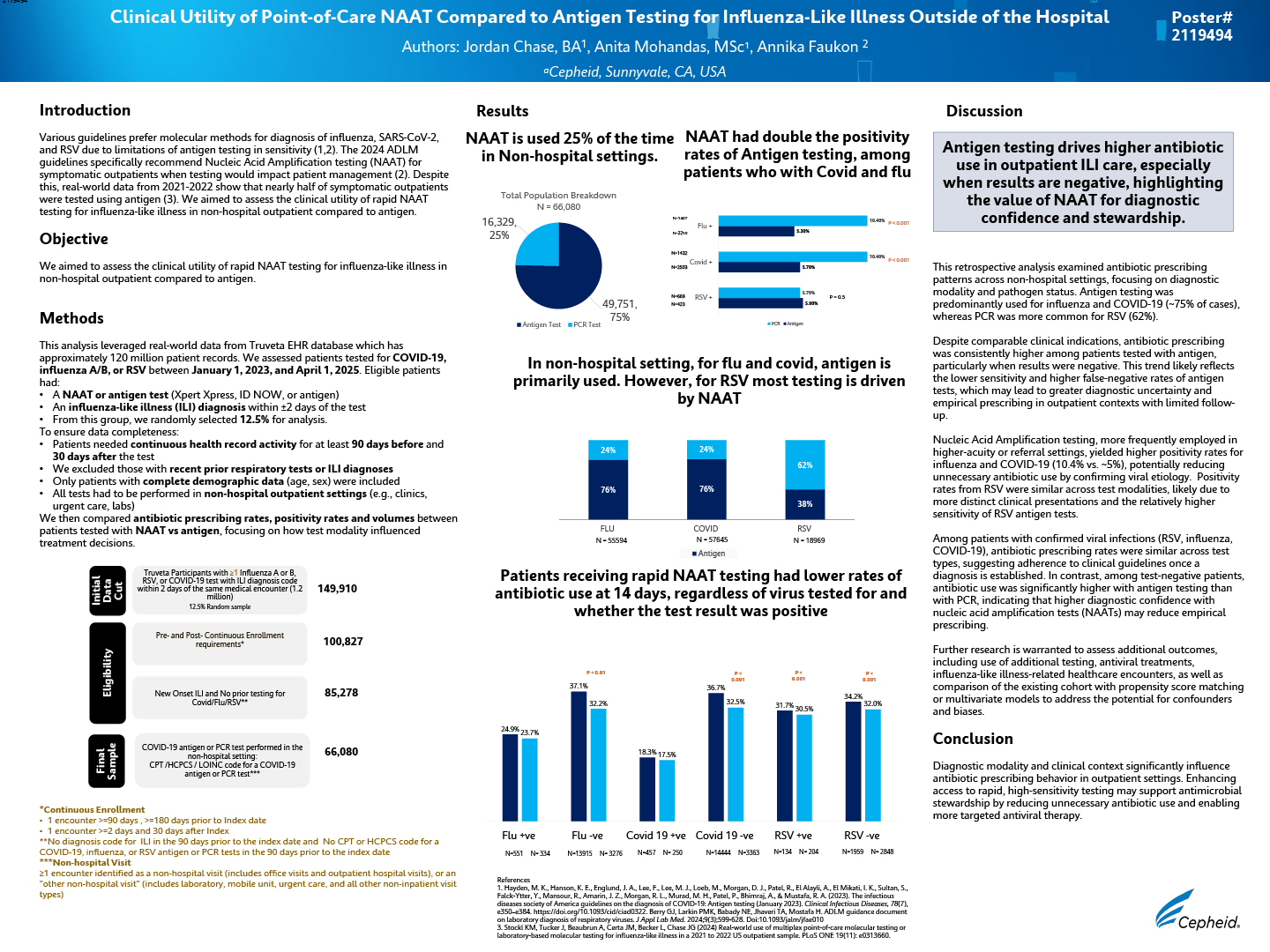
- Chase, J., Mohandas, A., e Faukon, A. (2025, outubro). Utilidade clínica do NAAT em “point of care” em comparação com o teste de antigénios para doença semelhante à gripe fora do hospital. Poster apresentado em IDWeek 2025, Atlanta, GA, Estados Unidos.
- A IDWeek 2025TM é uma reunião anual da Infectious Diseases Society of America (IDSA), da Society for Healthcare Epidemiology of America (SHEA), da HIV Medicine Association (HIVMA), da Pediatric Infectious Diseases Society (PIDS) e da Society of Infectious Diseases Pharmacists (SIDP). Sob o tema «Fazer Avançar a Ciência, Melhorar os Cuidados», a IDWeek apresenta os mais recentes avanços científicos e abordagens de transposição da investigação para a prática clínica (bench-to-bedside) na prevenção, diagnóstico, tratamento e epidemiologia de doenças infeciosas, incluindo o VIH, ao longo de todas as etapas da vida. A IDWeek 2025™ tem lugar em outubro 19-22 no Georgia World Congress Center (285 Andrew Young International Blvd NW) em Atlanta, GA. Para obter mais informações, visite www.idweek.org.
Ler a seguir
Mais