prod:prod_dcx-login





Segui


Condividi

3 minuti di lettura
21 novembre 2025
SALUTE RESPIRATORIA
Articolo
Perché il tipo di test è importante: PCR vs. antigene nelle cure respiratorie ambulatoriali
Cepheid researchers have found that diagnostic test modality influences treatment decisions in outpatient care 1—decisions that may impact efforts to mitigate antimicrobial resistance. The findings were presented at IDWeekTM 2025 (October 19-22; Atlanta Georgia2), one of the leading infectious disease conferences in the world.
In sintesi
Cepheid researchers undertook a retrospective analysis of Truveta’s EHR data (covering over 120 million patient records) and compared the clinical utility of rapid nucleic acid amplification tests (NAATs, commonly PCR) versus antigen tests for diagnosing influenza-like illness (ILI) in outpatient settings. Lo studio si è concentrato sui pazienti sottoposti a test per COVID-19, influenza A/B o RSV tra gennaio 2023 e aprile 2025. Nonostante le linee guida preferissero i metodi molecolari per i pazienti sintomatici, i test antigenici sono stati ancora utilizzati in circa il 75% dei casi di influenza e di COVID-19. The study found that patients tested with antigen were significantly more likely to receive antibiotics—especially when test results were negative—highlighting the diagnostic and stewardship advantages of NAAT.
I punti chiave
- Uso di antibiotici: Patients tested with antigen had higher rates of antibiotic use than those tested with PCR, regardless of whether the test result was positive or negative.
- Affidabilità diagnostica: i test PCR hanno evidenziato tassi di positivit�iù elevati per influenza e COVID-19 (10,4% vs. ~5.7%), il che potrebbe ridurre le prescrizioni di antibiotici non necessarie.
- Preferenza della modalità : i test antigenici hanno dominato i test per influenza e COVID-19, mentre la PCR �isultata preferibile per lRSV (utilizzata nel 62% dei casi).
- Implicazioni cliniche: nelle popolazioni negative al test, la prescrizione di antibiotici era significativamente maggiore con i test antigenici, il che suggerisce che una sensibilità inferiore porta a un trattamento più empirico.
Perché è importante
La somministrazione eccessiva di antibiotici contribuisce alla resistenza antimicrobica, una minaccia crescente per la salute globale. Questo studio sottolinea come la scelta del test diagnostico possa influenzare le decisioni terapeutiche, soprattutto in contesti ambulatoriali in cui il follow-up può essere limitato. Migliorando lâaccuratezza diagnostica, i NAAT possono aiutare i medici a prendere decisioni più sicure, a ridurre lâuso inutile di antibiotici e ad allinearsi meglio alle linee guida cliniche. Questo aspetto è particolarmente importante poiché i virus respiratori continuano a circolare e a presentare sintomi sovrapponibili.
“As respiratory season approaches, these findings are especially relevant for clinicians, public health leaders, and diagnostic innovators focused on mitigating antimicrobial resistance,” said Jordan Chase, lead author on the study and Global Lead, Health Economics and Outcomes Research for Cepheid. “Studies, like this one, that examine real-world practices are vital to informing stewardship initiatives and supporting patient-centered care everywhere it is delivered.”
La conclusione
Nelle cure ambulatoriali non ospedaliere, i test rapidi NAAT offrono uno strumento diagnostico più affidabile rispetto ai test antigenici, favorendo un minore uso di antibiotici e una migliore gestione. Poiché i sistemi sanitari si sforzano di migliorare i risultati e di ridurre la resistenza, lâespansione dellâaccesso ai test ad alta sensibilità , come la PCR, dovrebbe essere una priorità .
Vuoi saperne di più?
Leggi il poster scientifico presentato a IDWeek 2025.
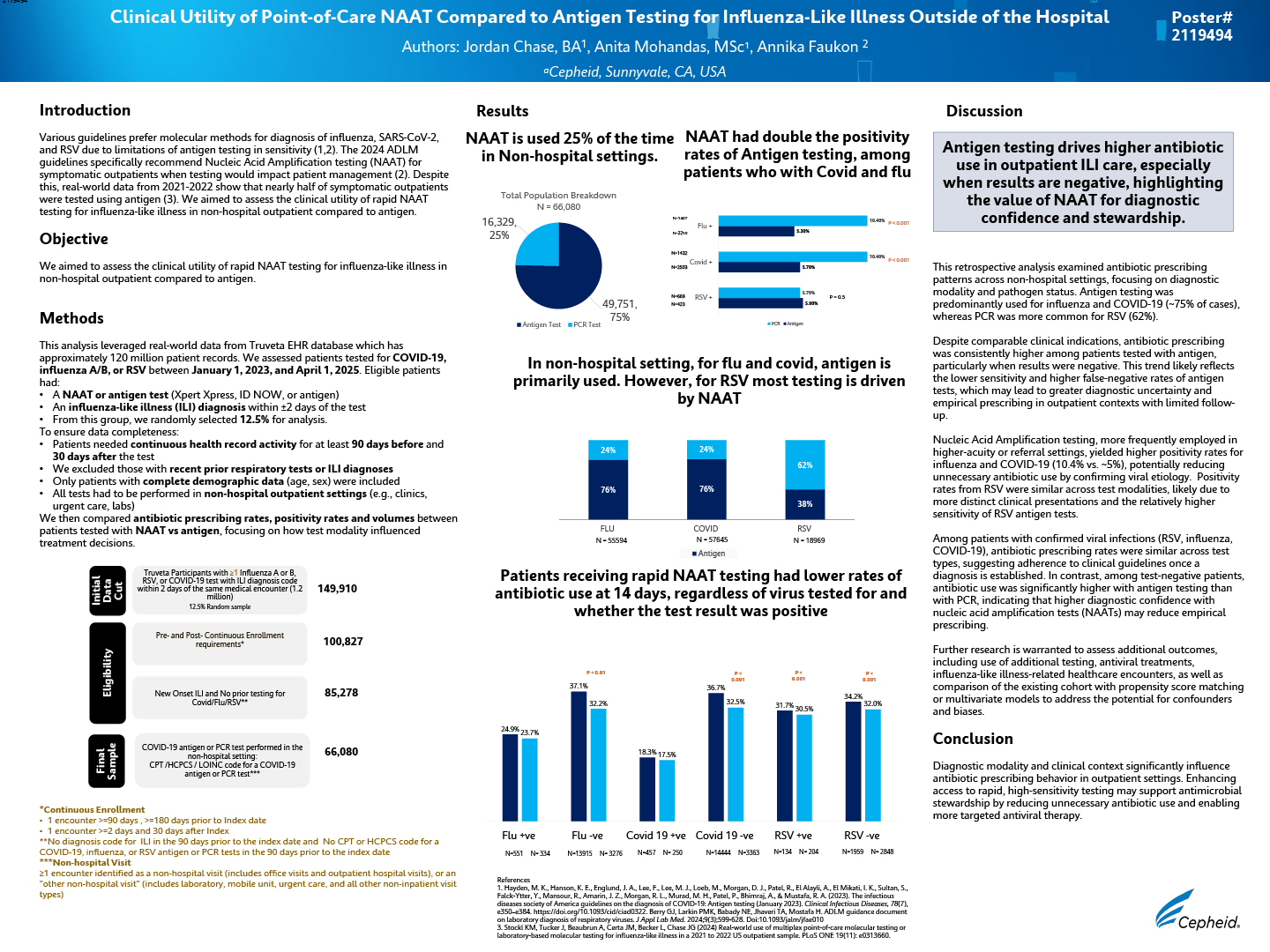
- Chase, J., Mohandas, A., e Faukon, A. (2025, ottobre). Clinical utility of point-of-care NAAT compared to antigen testing for influenza-like illness outside of the hospital. Poster presentato a IDWeek 2025, Atlanta, GA, Stati Uniti.
- IDWeek 2025TM è una riunione annuale della Infectious Diseases Society of America (IDSA), della Society for Healthcare Epidemiology of America (SHEA), della HIV Medicine Association (HIVMA), della Pediatric Infectious Diseases Society (PIDS) e della Society of Infectious Diseases Pharmacists (SIDP). With the theme “Advancing Science, Improving Care,” IDWeek features the latest science and bench-to-bedside approaches in prevention, diagnosis, treatment and epidemiology of infectious diseases, including HIV, across the lifespan. IDWeek 2025™ takes place Oct. 19-22 at the Georgia World Congress Center (285 Andrew Young International Blvd NW) in Atlanta, GA. Per ulteriori informazioni, visita www.idweek.org.
Leggi successivo
Altro