prod:prod_dcx-login





Follow


Share

3m Read
November 21, 2025
RESPIRATORY HEALTH
Article
Why Test Type Matters: PCR vs. Antigen in Outpatient Respiratory Care
Cepheid researchers have found that diagnostic test modality influences treatment decisions in outpatient care 1—decisions that may impact efforts to mitigate antimicrobial resistance. The findings were presented at IDWeekTM 2025 (October 19-22; Atlanta Georgia2), one of the leading infectious disease conferences in the world.
In Summary
Cepheid researchers undertook a retrospective analysis of Truveta’s EHR data (covering over 120 million patient records) and compared the clinical utility of rapid nucleic acid amplification tests (NAATs, commonly PCR) versus antigen tests for diagnosing influenza-like illness (ILI) in outpatient settings. The study focused on patients tested for COVID-19, influenza A/B, or RSV between January 2023 and April 2025. Despite guidelines favoring molecular methods for symptomatic patients, antigen tests were still used in about 75% of cases for flu and COVID-19. The study found that patients tested with antigen were significantly more likely to receive antibiotics—especially when test results were negative—highlighting the diagnostic and stewardship advantages of NAAT.
The Big Take-Aways
- Antibiotic Use: Patients tested with antigen had higher rates of antibiotic use than those tested with PCR, regardless of whether the test result was positive or negative.
- Diagnostic Confidence: PCR testing showed higher positivity rates for flu and COVID-19 (10.4% vs. ~5.7%), which may reduce unnecessary antibiotic prescriptions.
- Modality Preference: Antigen tests dominated flu and COVID-19 testing, while PCR was preferred for RSV (used in 62% of cases).
- Clinical Implications: In test-negative populations, antibiotic prescribing was significantly higher with antigen tests, suggesting that lower sensitivity leads to more empirical treatment.
Why It Matters
Antibiotic overuse contributes to antimicrobial resistance, a growing global health threat. This study underscores how the choice of diagnostic test can influence treatment decisions, especially in outpatient settings where follow-up may be limited. By improving diagnostic accuracy, NAATs can help clinicians make more confident decisions, reduce unnecessary antibiotic use, and align better with clinical guidelines. This is particularly important as respiratory viruses continue to circulate and overlap in symptoms.
“As respiratory season approaches, these findings are especially relevant for clinicians, public health leaders, and diagnostic innovators focused on mitigating antimicrobial resistance,” said Jordan Chase, lead author on the study and Global Lead, Health Economics and Outcomes Research for Cepheid. “Studies, like this one, that examine real-world practices are vital to informing stewardship initiatives and supporting patient-centered care everywhere it is delivered.”
The Bottom Line
In non-hospital outpatient care, rapid NAAT testing offers a more reliable diagnostic tool than antigen tests, leading to lower antibiotic use and better stewardship. As healthcare systems strive to improve outcomes and reduce resistance, expanding access to high-sensitivity testing like PCR should be a priority.
Want to know more?
Read the scientific poster presented at IDWeek 2025.
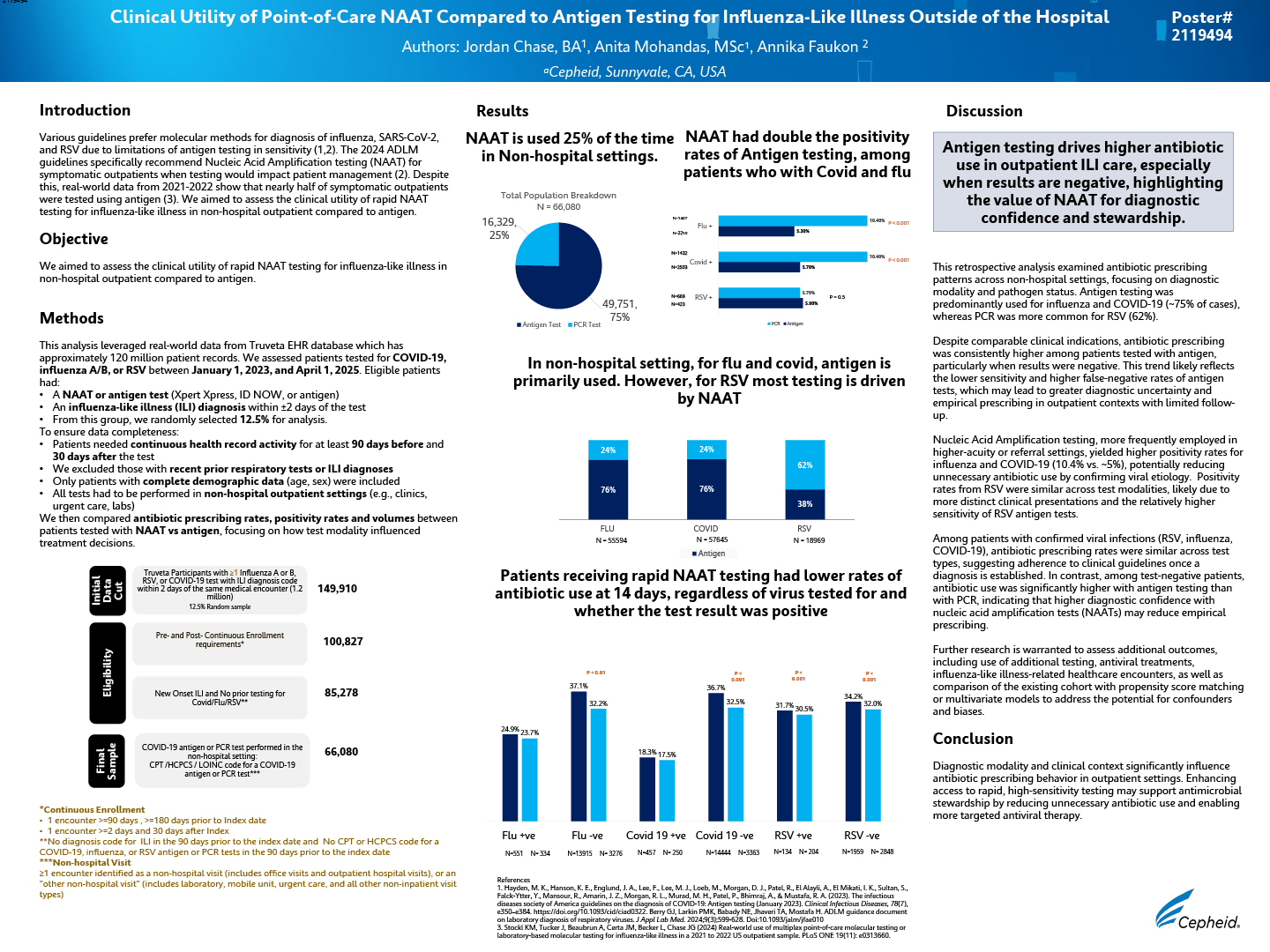
- Chase, J., Mohandas, A., & Faukon, A. (2025, October). Clinical utility of point-of-care NAAT compared to antigen testing for influenza-like illness outside of the hospital. Poster presented at IDWeek 2025, Atlanta, GA, United States.
- IDWeek 2025TM is an annual meeting of the Infectious Diseases Society of America (IDSA), the Society for Healthcare Epidemiology of America (SHEA), the HIV Medicine Association (HIVMA), the Pediatric Infectious Diseases Society (PIDS) and the Society of Infectious Diseases Pharmacists (SIDP). With the theme “Advancing Science, Improving Care,” IDWeek features the latest science and bench-to-bedside approaches in prevention, diagnosis, treatment and epidemiology of infectious diseases, including HIV, across the lifespan. IDWeek 2025™ takes place Oct. 19-22 at the Georgia World Congress Center (285 Andrew Young International Blvd NW) in Atlanta, GA. For more information, visit www.idweek.org.
Read Next
More